Polyvinyl Chloride (PVC) is one of the most widely used thermoplastic materials in industrial piping and fluid handling systems. Learn about its properties, types, and why it is the material of choice for corrosive environments.
The most widely specified thermoplastic in industrial piping
PVC (Polyvinyl Chloride) is a synthetic thermoplastic polymer made from vinyl chloride monomers. It contains approximately 57% chlorine by mass, which gives it inherent flame retardancy and outstanding resistance to most acids, bases, and aqueous solutions. At Harrison Machine & Plastic, we fabricate PVC into ducts, fittings, tanks, and custom components for industrial environments where chemical exposure and durability are paramount.
Harrison fabricates with all major PVC grades
Unplasticized PVC — the standard for industrial pipe, duct, and fittings. Excellent chemical resistance up to 140°F. Most cost-effective thermoplastic for corrosive environments.
Post-chlorinated PVC with a higher service temperature of 200°F. Same outstanding chemical resistance as uPVC, preferred for hot process lines and Corzan® duct systems.
PVC with added plasticizers for flexibility. Used in drainage hose, wire insulation, and gasket material. Lower chemical resistance than rigid grades.
Not technically PVC, but a fluoropolymer alternative offering superior chemical resistance up to 275°F. Ideal for ultra-pure, semiconductor, and pharmaceutical applications.
Why engineers specify PVC for demanding industrial applications
Excellent resistance to acids, alkalis, salts, and most organic solvents. Ideal for chemical processing, plating, and water treatment.
Tensile strength of 7,000–7,500 psi with a flexural modulus of 400,000–480,000 psi. Maintains rigidity under sustained loads.
Self-extinguishing (UL 94 V-0). The high chlorine content inhibits combustion, making PVC suitable for fume exhaust and building applications.
Virtually zero water absorption. PVC does not swell, warp, or delaminate in wet or submerged service conditions.
High dielectric strength and volume resistivity. Used extensively in electrical conduit and wire/cable jacketing.
Low coefficient of thermal expansion. PVC retains its shape across a wide range of temperatures, ensuring reliable fit in fabricated systems.
Easily cut, drilled, turned, and welded. Harrison's CNC machining and hot-gas welding capabilities produce precise custom components.
Among the most economical engineering thermoplastics. Low material and fabrication costs compared to metals, fiberglass, or high-performance polymers.
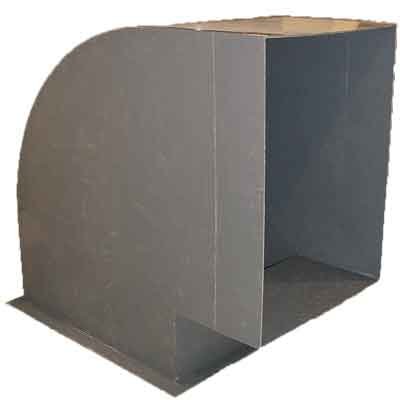
PVC is resistant to a broad range of industrial chemicals
⚠️ Always consult a chemical resistance chart for your specific fluid and concentration before material selection.
Typical values per ASTM D1784 Cell Class 12454
| Property | Value | Standard |
|---|---|---|
| Specific Gravity | 1.38 – 1.45 g/cm³ | ASTM D792 |
| Tensile Strength | 7,000 – 7,500 psi | ASTM D638 |
| Flexural Modulus | 400,000 – 480,000 psi | ASTM D790 |
| Izod Impact Strength | 0.4 – 1.0 ft·lb/in | ASTM D256 |
| Hardness (Rockwell) | R110 – R120 | ASTM D785 |
| Max Service Temp. | 140°F (60°C) | — |
| Thermal Conductivity | 0.11 – 0.17 W/m·K | — |
| Flammability | Self-Extinguishing (V-0) | UL 94 |
| Chemical Formula | (CH₂CHCl)n | — |
| Chlorine Content | ~57% by mass | — |
How PVC compares for industrial fluid handling
Harrison's technical team can help you choose between PVC, CPVC, PP, and PVDF for your specific application
Contact Harrison Engineers